Lighting a Fire Along the Timeline
— A Portrait of Hsu Cho-yun’s Life, Historical Vision, and Cultural Imagination
By Ma Siwei
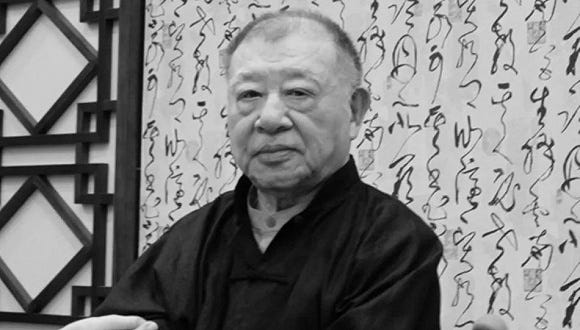
On the morning of August 4, 2025, just as the pale light of dawn reached the eaves of a gray-brick house in the suburbs of Pittsburgh, Hsu Cho-yun (许倬云) quietly closed the final book of his life. According to the student who had been caring for him, the book was the same worn copy of Records of the Grand Historian (Shiji,《史记》) that he had brought with him to America in his youth. The flyleaf still held the verse his father had penned for him decades ago. He passed away just weeks shy of his ninety-fifth birthday. News of his death crossed the Pacific with swiftness—Chinese social media and academic circles lit up with tributes, elegies titled “A Great River Enters the Sea,” and, most poignantly, “The Historian Who Wrote for the People Has Left Us.” In that moment, it dawned on many: the historian who spent a lifetime navigating the currents of time—his wheelchair his boat, the page his oar—had, at last, slipped quietly offstage. What he left behind was an oceanic archive: writings that spanned from prehistoric archaeology to sweeping social history, from Bronze Age China to contemporary cultural reflection. If twentieth-century Chinese historiography, beginning with Liang Qichao, resembles a river that split into many branches, then Hsu Cho-yun was surely one of its most resilient and steady tributaries: one who flowed calmly through the deep channels of academic scholarship, while also nourishing the broader public with clear, lucid prose. Through what he often called “cross-sectional cuts along the timeline,” he offered Chinese readers a multi-dimensional map for understanding their own civilizational DNA.
Born in 1930 on Gulangyu Island in Xiamen, with ancestral roots in Wuxi—a city cradled in the misty waterways of southern Jiangnan—Hsu grew up in a family of scholar-officials whose lineage could be traced back to the Qianlong era. This deep intellectual inheritance meant that, even as a child, he breathed the conjoined airs of Han-Song classical thought and modern Western learning in his father's study. His father, Hsu Feng-tsao (许凤藻), had graduated from the Jiangnan Naval Academy founded by Zeng Guofan and began his career as a gunboat lieutenant before transitioning into civil service. Fluent in both English and classical Chinese, he became the young Hsu’s first tutor. During the family’s wartime displacement to Sichuan and Chongqing, Hsu’s father would recite Ouyang Xiu’s “Epitaph at Longgang” (Longgang Qianbiao,《泷冈阡表》) by oil lamp in their air-raid shelters. The line, “If I sought to preserve life but failed, then let neither the living nor the dead bear regret,” became a refrain etched into the boy’s mind. He was not yet ten when he saw bodies hanging from telephone poles, a severed leg beneath a tree, and an infant still suckling at the breast of its headless mother. Years later, as a celebrated historian, he would recount these scenes without sentimentality, remarking, “Perhaps because I was born into an age filled with self-proclaimed heroes who brought only suffering to ordinary people, I long ago lost my reverence for so-called greatness.”
Returning to Wuxi after the war, Hsu—born with congenital disabilities in his legs—had never attended formal primary school. Instead, he jumped straight into high school, an experience of “displacement” that gave him an abiding skepticism toward rote education and a self-directed mastery of classical Chinese, English, and historical thinking. In 1949, his family relocated to Taiwan. He initially enrolled in the Department of Foreign Languages at National Taiwan University, but the essays he submitted for entrance exams in Chinese and history caught the attention of the grading faculty, who passed them along to the university’s president, Fu Ssu-nien (傅斯年). Fu famously remarked, “This young man sees with the eye of a historian,” and urged him to transfer to the history department. In retrospect, that bureaucratic adjustment charted the course for half a century of uniquely panoramic Chinese historiography. Had it not occurred, Hsu might have become a refined translator; instead, he became the rare polymath who could build intellectual bridges between Shang dynasty bronze inscriptions and modern social theory.
In 1957, with persistent lobbying from Hu Shih (胡适), Hsu finally received a $1,500 scholarship from New York philanthropist Hsu Ming-hsin (徐铭信), which allowed him to set sail for the University of Chicago. At the time, Chicago stood as a bastion of "macro-sociology" in the United States. The theories of Talcott Parsons on structural functionalism, Max Weber’s comparative civilizational studies, and Arnold Toynbee’s “challenge and response” model were all engaged in heated debate there. Hsu studied under Homer H. Dubs (顾立雅), focusing on Social Changes in the Spring and Autumn Period, but found himself increasingly drawn to courses in sociology, anthropology, and theology. He often likened his education to cooking lu mian—a rich, gelatinous Chinese noodle dish where every ingredient, from archaeology and oracle bone script to economic modeling, is stirred into one simmering pot. His “four-system” framework—cultural, economic, political, and social—emerged during this period as a method for tracing historical dynamics in multidimensional flux.
It was this lu mian-style intellectual stew that enabled his dissertation to move beyond traditional rites-based histories into more structural analyses: class fluidity, warfare frequency, regional trade corridors. By the time he relocated to the University of Pittsburgh in 1970, he had already internalized the spirit of interdisciplinary fluency. In the river-valley steel town of Pittsburgh, Hsu was equally at home debating radiocarbon dating with archaeologists, religious pluralism with sociologists, and demographic modeling with computer scientists. The seeming friction between his training in classical Chinese historiography and the American academic emphasis on empirical modeling became, for him, a generative tension rather than a cultural impediment.
Hsu’s academic reputation was cemented in the late 1970s and early 1980s with a trilogy of groundbreaking English-language books: Chinese History: New Perspectives (later reissued in Chinese as Zhongguo Gudai Shehui Shilun, 《中国古代社会史论》), Agriculture and Commerce in Han China (Handai Nongye, 《汉代农业》), and The Formation of the Chinese Realm: A History of Western Zhou (Xizhou Shi, 《西周史》). If one were to think of Chinese civilization as a living organism, these three books charted its social tissues, its economic bloodstream, and its political skeleton. Through what he called “slicing along the timeline,” Hsu illuminated three dynamic layers of historical transformation: the “blood exchange” between noble and plebeian classes during the Shang-Zhou transition; the economic “pulse” of market-oriented agriculture following Qin-Han unification; and the ideological shift embedded in the relocation from the ancestral Zongzhou to Chengzhou, which symbolized the emergence of the “Tianxia” (天下) worldview. Li Ji (李济), the pioneering Chinese archaeologist and one of Hsu’s early mentors, once praised this “dual matrix of system and cross-section” as a necessary departure from linear dynastic chronicles—and as a welcome corrective to the static formalism then dominating structural-functional approaches.
Today, no young historian of early China can approach the period from Shang to Han without at least acknowledging the coordinates set by Hsu’s model. Even critics must map their disagreement using his terminology.
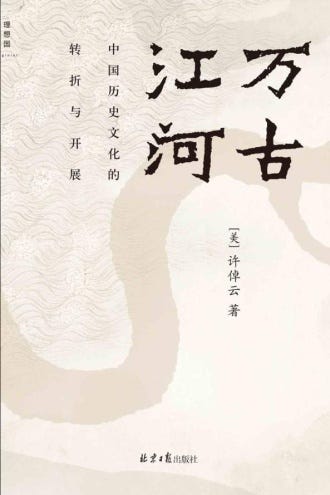
And yet, for the general reader, it was not these academic landmarks but his post-retirement writings that made Hsu Cho-yun a household name in the Chinese-speaking world. After stepping down from teaching in the late 1990s, he confessed, somewhat wryly, “Scholarly papers are written for fellow professionals. But I have a greater desire to give an account to the uncles and aunts in my neighborhood.” It was in this spirit that he authored A River of Time (Wangu Jianghe, 《万古江河》)—a sweeping cultural history of China that broke free from the straightjacket of dynastic succession. Instead of narrating reigns and revolutions, Hsu wrote of bronze weaponry and hydraulic engineering, of monastic Buddhism and transregional trade, of how overlapping “mega-systems” shaped the lived experience of a people over millennia. He took China not as a nation-state, but as a civilizational current that had repeatedly absorbed and re-channeled foreign streams.
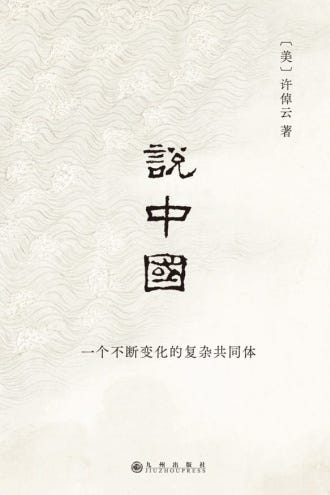
This effort continued in Telling China’s Story (Shuo Zhongguo, 《说中国》), which asked: what force enabled a peasant in Gansu and a merchant in Guangdong to see themselves as part of a shared culture? His next volume, The Spirit of Chinese Culture (Zhongguo Wenhua de Jingshen, 《中国文化的精神》), ventured even further—probing the ethical roots and spiritual scaffolding of this cultural cohesion. Through the intertwined ideals of li-yue (礼乐, ritual and music), the inclusive ethos of tianxia (天下, “all under heaven”), and the gentry’s tradition of self-restraint and public responsibility, Hsu argued that “Huaxia”—the self-conception of Chinese civilization—had managed, through periods of fragmentation and crisis, to once again gather into a coherent whole.
These three books climbed bestseller lists in mainland China and Taiwan alike, and were widely quoted across Chinese-language podcasts, WeChat essays, and livestream lectures aimed at young people struggling with cultural disorientation in an age of hyper-modernity. For some, Hsu’s prose was a map out of the ruins of “fragmented historicism”; for others, it veered uncomfortably close to essentialism. In public forums, Hsu calmly countered such critiques: “I reject the idea of cultural superiority, but I also reject cultural nihilism.” Unlike monotheistic traditions that organize around exclusivity, he argued, the Chinese civilizational tradition—with its polytheism, pragmatism, and syncretic dynamism—offers a model of “tolerance without dilution.”
It was precisely for this reason that he sounded the alarm over China’s escalating nationalism, both in official ideology and online discourse. “The smaller you draw your circle,” he said in a widely shared lecture, “the more enemies you invite inside.” That sentence alone—widely reposted on Chinese social media—became an unofficial mantra for cosmopolitan-minded readers resisting ethno-nationalist rhetoric.
Comparisons between Hsu Cho-yun, Hu Shih (胡适), and Ray Huang(Huang Renyu 黄仁宇) have become canonical in lectures on modern Chinese historiography. Hu Shih, heir to the philological tradition of the Qing dynasty, championed the credo “bold hypotheses, careful verification,” anchoring his method in close textual analysis and a micro-historical sensibility. Ray Huang, influenced by Arnold Toynbee’s macro-civilizational theories, used 1587, A Year of No Significance (Wanli Shiwunian,《万历十五年》) as a lens to diagnose the sclerosis of imperial China’s bureaucratic machinery—his “Big History” approach won acclaim for its sweeping structural critiques. Hsu, interviewed by Times Higher Education, offered his own metaphor: “Hu Shih uses a macro lens to photograph a single oracle bone; Ray Huang climbs to the rooftop of the Forbidden City with a wide-angle lens. I prefer the tilt-shift lens—keeping the periphery in focus while adjusting the focal plane to reveal how the local is embedded in the total.”
This tilt-shift sensibility shaped Hsu’s late-period writing. In a single paragraph, he might juxtapose Zhougong’s ritual reforms with the governance structure of the European Union; or compare the Confucian notion of benevolent rule with the bureaucratic ethics of Max Weber. Systems theory—applied with a historian’s intuition—allowed him to bind these references together without indulging in superficial analogies. Most importantly, he insisted that all historical transitions should be judged not by the slogans they proclaimed, but by the “everyday cost” they imposed on ordinary people.
It is precisely this blend of breadth and groundedness that became the subject of both admiration and controversy. While many readers praised Hsu’s ability to convey cultural complexity in lucid prose, some scholars criticized his work as insufficiently rigorous—accusing him of sacrificing evidentiary density for narrative grandeur. In a famous public spat, the polemicist Li Ao (李敖) accused him of “waving academic authority like a cudgel.” Hsu’s reply was characteristically measured: “I write history to offer the common reader a compass. If others wish to use hats as weapons, let them do as they please.”
Criticism did little to diminish his popular appeal. According to one university instructor’s tally, between 2015 and 2025, A River of Time was the second most frequently assigned text on undergraduate general education syllabi in China—surpassed only by Qian Mu’s Outline of National History (Guoshi Dagang,《国史大纲》) and Huang Renyu’s 1587. More tellingly, many once-zealous young nationalists found themselves, after encountering Hsu’s books, engaging in conversations about “All-Under-Heavenism” (tianxia zhuyi, 天下主义) and intercivilizational dialogue—terms that had vanished from public discourse for decades.
If one were to distill Hsu Cho-yun’s intellectual project into a set of core principles, they might read as follows: First, history is the interaction of dynamic systems—change is the only constant. Second, the livelihoods and sentiments of ordinary people are the ultimate criteria by which institutions must be judged. Third, interdisciplinary dialogue is not ornamental seasoning; it reshapes the very questions we ask. Fourth, cultural identity must ride on twin wheels: openness and self-reflection. It must reject both chauvinism and nihilism. These tenets thread through all his writings, from specialized studies of early China to reflections on the contemporary world. What appears at first to be a vast range—from oracle bones to livestream lectures, from Zhou dynasty kinship structures to the trauma of nationalism—emerges, upon closer inspection, from a single ethical and methodological impulse: to “cut across the timeline” and “write history for the people.”
Retracing Hsu’s life path, one cannot help but notice certain synchronies of history and biography. During the trauma of war, he came to understand the importance of the plebeian perspective. At the height of the Cold War, he moved to America, only to use the Chinese language to explain China to the world. In the early twenty-first century, as globalization faltered and new nationalisms surged, he reminded his compatriots of their own tradition of “all-under-heaven” universalism. Some likened him to a ferryman, carrying classical insights into the hearts of digitally native youth through accessible prose. Others described him as a single ripple in an ever-flowing river, always moving, never still.
At his memorial in 2025, a former student read aloud the epitaph Hsu had chosen for himself: “The river enters the sea; the heart remains undiminished.” The line comes from the Doctrine of the Mean (Zhongyong,《中庸》), but it also reads as a final instruction to the next generation: excavate the patterns of change from the riverbed, but do not forget that all waters seek their common confluence.
Today, his lecture notes, correspondence, and manuscripts are being digitized in Taipei and Pittsburgh. A team of young digital humanists is reconstructing the interrelations between agriculture, handicraft, and transport networks outlined in Agriculture and Commerce in Han China. Meanwhile, archaeology students are annotating The Formation of the Chinese Realm with newly discovered field data, testing the predictive boundaries of his theory of Zhou’s intermarriage networks. Some cross-sections, once thought to be firm, may shift under new evidence. But that, Hsu would say, is exactly as it should be. The beauty of historical scholarship lies not in the perfection of its authorities, but in the continual rewriting and re-questioning performed by its successors.
And for those still hunched over their desks, pen in hand, Hsu Cho-yun left not just a grand interpretive framework for understanding China, but something rarer still: a quiet, persistent way of being. In the window of his study, he once hung a line of his own calligraphy, now etched into many minds: “Shape yourself through your work; settle humanity through history.”