

“The Next Step” Has Already Begun
From Narratives of Discrimination to State Action
Li Zhide
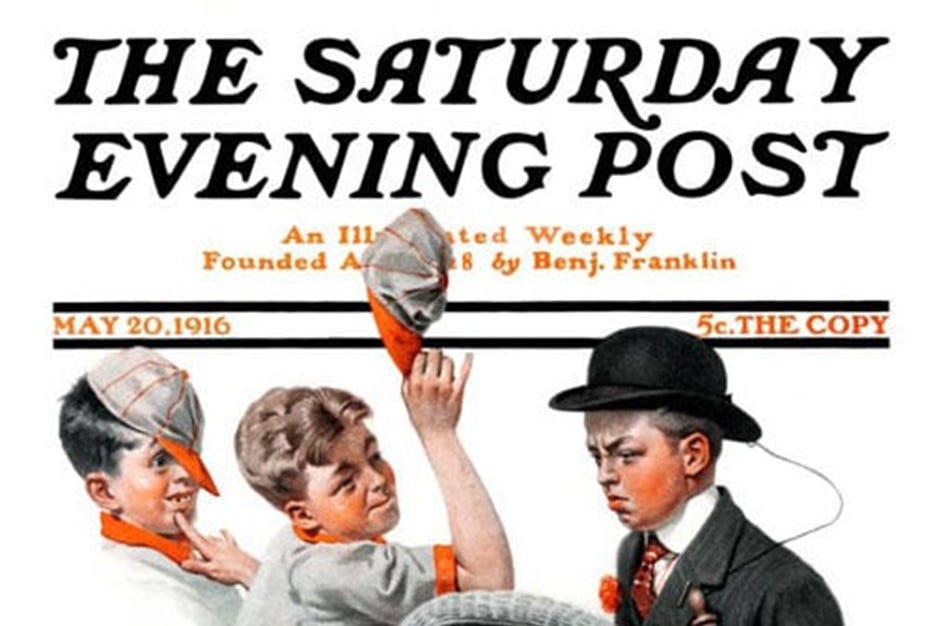
On July 29, 2026, The Saturday Evening Post published a column by Ben Railton, a scholar of American history and American studies, titled “Does Remembering Historical Injustice Erase America’s True Story—or Help Us Better Understand It?” The article responded to a 162-page report issued by the White House Domestic Policy Council on July 4, Saving America’s Story: How the Ideological Capture of the Smithsonian’s National Museum of American History Erases Our Heritage. The White House report singled out “Many Voices, One Nation,” an exhibition at the Smithsonian’s National Museum of American History, for particular criticism. The exhibition explains that nineteenth-century white Americans felt threatened by the racial identity of Chinese immigrants, helping to produce the Chinese Exclusion Act of 1882 and a succession of restrictive immigration laws. The White House report accused the exhibition of portraying those laws as “tools of white supremacy.”
Railton’s response is more than a simple moral denunciation. He reconstructs the policies, rhetoric, and violence that preceded the Chinese Exclusion Act, showing that exclusion was not a sudden legislative accident. It had a long period of preparation. In 1850, California passed the Foreign Miners’ Tax Act, imposing a monthly tax of twenty dollars on foreign miners, including Chinese and Latin American workers. After that law was repealed, California introduced a new tax of four dollars a month in 1852, with tax collectors directing most of their efforts at Chinese miners. Long before federal law formally excluded Chinese immigrants, local government had already defined them as foreigners who could be treated differently.
The Page Act of 1875 carried this local discrimination into federal law. Drafted by California congressman Horace Page, it is often regarded as the first federal immigration law designed to create a systematic structure of exclusion. In the name of combating contract labor, prostitution, and supposedly “immoral activities,” the law subjected immigrants arriving from Asia to special inspection. It did not formally declare that all Chinese women were to be excluded. In practice, however, enforcement focused overwhelmingly on them. Large numbers of unmarried Chinese women, or women traveling without male companions, were presumed to be prostitutes and forced to prove their moral character through severe and intrusive questioning. Chinese men could still be admitted as cheap labor, but they found it extremely difficult to bring wives and families into the country. From the beginning, Chinese exclusion was more than a labor policy. It was also a system designed to obstruct family formation and prevent Chinese communities from reproducing themselves.
Street violence came before the federal laws. On October 24, 1871, a mob attacked the Chinese community in Los Angeles, looting homes and businesses and lynching nineteen Chinese residents. The victims made up more than one-tenth of the city’s Chinese population of 172. Several members of the mob were convicted, but the California Supreme Court overturned the verdicts in 1873. In the end, not one of the attackers served a prison sentence. What made the episode so terrifying was not only the number of people killed. It showed that when racial violence received judicial tolerance, the mob learned that some lives did not enjoy the same protection as others.
In 1877, economic depression and unemployment pushed labor unrest in San Francisco toward a crisis. After a rally at the Sand Lot, the violence quickly turned against the Chinese community. Chinese-owned laundries, shops, and homes were attacked and burned. Denis Kearney later organized this anger into a more durable political movement. He compressed complicated economic problems into a single slogan: “The Chinese must go.” Railroad capital, falling wages, unemployment, and widening inequality were pushed aside. Chinese immigrants became the most convenient scapegoats. Kearney later acknowledged that his aim was to turn local anti-Chinese sentiment into a national political issue and ultimately to stop Chinese immigration.
This language was not confined to the streets. In his 1875 State of the Union address, President Ulysses S. Grant described Chinese women as an “evil” requiring congressional action. John Marshall Harlan, the Supreme Court justice later celebrated for defending equal rights for Black Americans, also described the Chinese as “a race utterly foreign to our own” that would never assimilate. The remark did not appear in a majority opinion formally written by Harlan. It was connected to his discussion of exclusion policy in relation to the Wong Chin Foo case. He also joined the dissent opposing the recognition of birthright citizenship for American-born children of Chinese parents. This detail matters. A person who opposes discrimination against one racial group is not necessarily free from the prejudices of his age when confronting another.
Railton therefore raises a question that cannot be avoided. When a nation tells its own history, does acknowledging violence, prejudice, and institutional exclusion amount to defaming the country? Or does it explain how the country departed, step by step, from its own principles? “Many Voices, One Nation” does not claim that American history consists only of oppression. Nor does it deny the American system’s capacity for reform. It simply shows that the country’s traditions of freedom and exclusion have always existed side by side. Chinese immigrants helped build the railroads, worked in the mines, and sustained urban economies, yet the law declared them an alien race incapable of assimilation. This contradiction does not damage the American story. It is part of the American story. The Smithsonian’s own description of the exhibition has consistently emphasized that it seeks to explain how the United States became one nation out of different populations, migration experiences, and cultural traditions.
In earlier discussions, it was still possible to say that defending the historical background of the Chinese Exclusion Act might lead to political action in the present. That judgment now needs to be updated. On July 24, President Donald Trump signed Executive Order 14416, formally turning the conclusions of Saving America’s Story into administrative policy. The order instructed the secretary of the interior, the director of the Office of Management and Budget, the administrator of the General Services Administration, and other officials to use their existing authority, funding conditions, and contracting powers to compel the Smithsonian to “correct” the problems identified in the report. It also directed the National Park Service to place temporary signs outside the National Museum of American History, informing visitors that the museum’s exhibitions reflected alleged “ideological capture” and providing what the government defined as “accurate information.”
This does not mean that the United States has reenacted the Chinese Exclusion Act. Exaggerating that point would weaken the credibility of the criticism. But this is no longer merely an academic dispute. The government has begun deciding how museums should describe history, which interpretations qualify as “accurate,” and which should be condemned as “ideological manipulation.” It is also preparing to use administrative authority and financial pressure to influence the content of exhibitions. Only twenty days passed between the report and the executive order.
This is how historical narrative becomes connected to political power. A state does not usually begin by announcing that it intends to restore a racial law already widely regarded as a national disgrace. It begins by changing the standard by which that law is judged. Discrimination is redescribed as the maintenance of order. Racial exclusion is presented as a practical necessity. The memory of victims is dismissed as ideological propaganda. Once society grows accustomed to this language, new forms of exclusion no longer need to carry the name of an old law. They need only new targets, new justifications, and new administrative instruments.
The real danger of the White House report, then, lies in more than its interpretation of the Chinese Exclusion Act of 1882. More troubling is the historical principle it seeks to establish: whenever a government invokes national security, cultural conflict, competition for jobs, or pressure from immigration, dividing people by race or national origin may be treated as an understandable, perhaps even defensible, “practical choice.”
Once that premise is accepted, the next step will not remain inside the museum. Today, officials may demand that an exhibition remove the language of “white supremacy.” Tomorrow, collective suspicion directed at an immigrant group may be justified as national security. More severe identity checks may be presented as administrative efficiency. Unequal treatment may be described as the protection of tradition. History does not return in precisely the same form. It changes its language and puts on a new uniform. It reappears through new forms, databases, budget provisions, and executive orders.
This is also the value of Railton’s article. He does not treat the Chinese Exclusion Act as an artifact sealed inside the nineteenth century. He reveals a complete political chain: economic anxiety is rewritten as racial resentment; racial resentment becomes a public slogan; public slogans encourage local violence; local violence receives judicial tolerance; political leaders then write prejudice into federal law. The present may not repeat every link in that chain. But denying historical injustice removes the first line of defense against its return.