

What Yan Yangchu’s Mass Education Offers China’s Modern Enlightenment Today
晏阳初平民教育对中国现代启蒙的启示
Li Honglin (黎洪林)
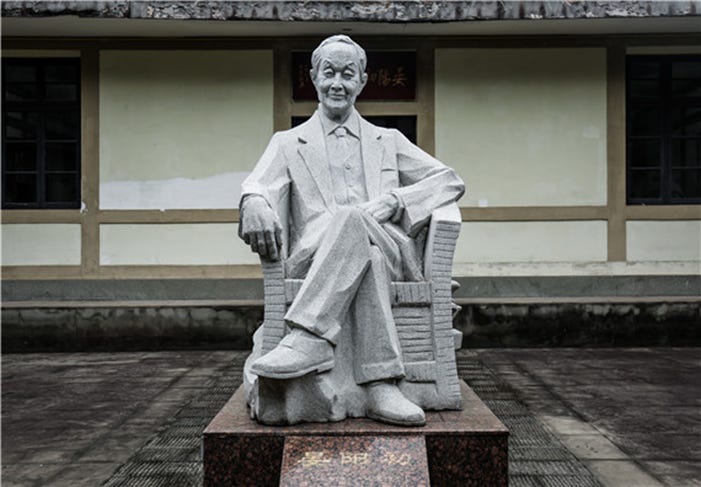
In the crowded gallery of twentieth-century Chinese intellectuals, Yan Yangchu (晏阳初)—also known as C. James Yen—often appears as a figure on the margins. He did not enter the textbook canon the way Lu Xun (鲁迅) did, nor did he become a shorthand for “rural philosophy” like Liang Shuming (梁漱溟). Yet if you widen the lens, what he tried to do was anything but small. He treated the countryside as China’s “laboratory of human life,” rewriting peasants’ everyday world through literacy, public health, and cooperatives, while also reshaping the country’s inner moral architecture through a Christian-inflected vision of salvation and a Confucian ethic of self-cultivation. More unusually, he grasped early on that the skills of “knowledge practice and value practice”—the know-how—had to be spread almost the way religious faith is spread: on one side, the practice of practical knowledge in material life, science and technology, and institutions; on the other, the practice of values, freedom, and responsibility. This impulse to bundle “knowledge–technique–value” into something like a modern crusade still carries more than a few lessons for China’s modern enlightenment today.
Releasing the Potential God Has Given to Ordinary People Through Mass Education
Yan Yangchu (晏阳初) was born in 1893 in Bazhong, Sichuan (四川巴中), into a family of scholars. As a boy he entered a school founded by the China Inland Mission, was baptized in 1904, and called himself “a disciple of Christ.” Christianity was not a bit of “background noise” in his life. It was a core engine that ran through his entire career. Later, his years at Yale and his participation in Christian fellowships only extended that line.
What truly redirected his life came during World War I, when he went to France to assist Chinese laborers. Large numbers of Chinese workers were digging trenches and hauling supplies in the French war zone. Most were illiterate; many could not even write a letter home. Yan wrote letters for them at night until his hand ached, and then decided to try teaching them one thousand commonly used Chinese characters. In a short time, these men could read and write simple sentences on their own. He then organized his method and had a group of young Chinese Christian volunteers imitate it, with striking success.
It was there that he made the vow so often quoted afterward: from then on, he would no longer simply do “relief work,” but would help China’s peasants “release the power God has given them, a power that has been suppressed.” The phrase “release” already carries a strong salvational charge. For him, peasants were not pitiable recipients waiting for charity. They were subjects pressed down by illiteracy, poverty, and institutions—and if given the right education and organization, they could stand up.
After returning to China, he promoted the Mass Education Movement (平民教育运动) within the YMCA (基督教青年会) network. He helped reduce the forty-thousand-character universe of written Chinese to about 1,300 high-frequency characters, and compiled several ultra-cheap textbooks. In 1923, the National Association of the Mass Education Movement (全国平民教育运动协会) was founded, and he was pushed to the front.
After several years of literacy work in cities, he moved the battlefield to Dingxian (丁县)—today Dingzhou, Hebei (今河北定州). There he designed a comprehensive experiment aimed at the countryside’s “four great problems”: poverty, disease, ignorance, and misgovernment. Education, public health, production, and civic training were packaged into an integrated rural reconstruction plan.
In today’s terms, it was a route to “restart modernization from below”: not heavy industry first and then waiting for a trickle-down effect, but human capability first, with economic and political change following as a consequence.
Technology Plus Value: Yan Yangchu’s Modern Crusade
Yan Yangchu (晏阳初) was not satisfied with running an experiment in a single county. He understood clearly that the problem was not one or two villages, but how an entire “backward Asia” might enter the modern world.
In 1960, he received the Ramon Magsaysay Award. In his acceptance speech he put the issue bluntly: the West had spent centuries mastering the science and technology needed to conquer the material world, while Asia’s traditional civilizations devoted their energies to self-cultivation, ethical relations, and the human heart. The result was that when technology arrived in Asia in the forms of colonialism and industrialization, local societies lacked both technical capacity and a modern faith capable of sustaining freedom and responsibility.
His judgment carried two layers. First, an imbalance in “knowing on the technological side”: science and technology were held by a small number of experts and a small number of countries, while most peasants remained passive labor. Second, a hollowing-out in “knowing on the value side”: colonial systems and indigenous authoritarianism together broke the continuity of traditional ethics, without enabling ordinary people to truly understand what modern keywords like democracy, freedom, and equality actually meant.
In that speech, he offered a formulation that became famous: modern Asia needed “scientific missionaries” and “crusaders for freedom” who both understood science and possessed faith. They would translate laboratory knowledge into practices peasants could understand and use, and they would turn abstract democratic ideals into habits embedded in daily life.
Put simply, it was two kinds of competence. One was the competence to grasp material life and institutions: irrigation, agricultural techniques, epidemic prevention, cooperative finance, local self-government. The other was the competence to grasp value and the inner life: that every person has dignity, that people have the right to participate in public decision-making, and that freedom must be bound to responsibility.
For him, neither could be missing. Technology without value would end, at best, with more machines and a bit more output—while leaving people with “more conditions for living, but no idea what they are living for.” Value without technology would leave all the fervor of “patriotism” and “saving the nation” to be worn down by reality.
Some later scholars described this stance as a “crusade of competence,” and the label is not unfair. The traditional Crusades crossed continents to fight over a holy city. Yan Yangchu (晏阳初) hoped to replicate the Dingxian model across the Global South, so that rural peasants could master technologies sufficient for self-reliance and values sufficient for self-respect. This was his “new holy war.”
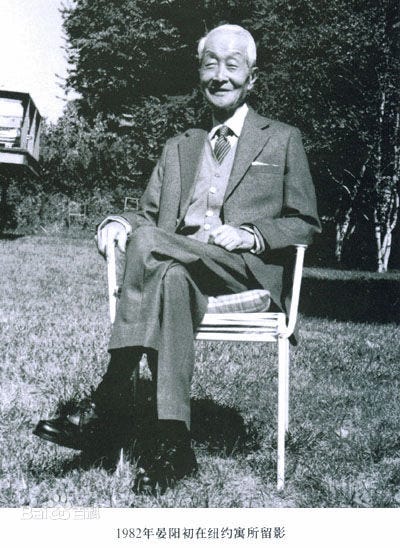
Confucian Secular Ethics Plus Christian Salvational Thinking: A Hybrid Engine
Yan Yangchu’s (晏阳初) desire to “save the world” was not simply the missionary pattern of “give you a Bible, and teach some culture on the side.” At its core was a hybrid engine: half Confucian secular ethics, half Christian salvational faith.
In the Confucian tradition, the sequence “cultivate the self, regulate the family, govern the state, bring peace to the world” carries a strong public orientation. The scholar’s learning is not aimed at saving the individual soul in private, but at entering governance, securing the people’s livelihood, and giving life its moral footing. For that reason, China’s long-running idea of “saving the world” has often taken the form of “the rise and fall of the realm is every person’s responsibility.” The emphasis is on the order of the world, not on the salvation of the individual soul.
Christianity is different. The training Yan Yangchu (晏阳初) received treated each person as made “in the image of God.” Every soul is worth saving—whether a Chinese laborer digging trenches in a war zone, or an illiterate peasant in the villages of Hebei. In his view, “rural China” was not soil awaiting the gathering of righteous insurgents. It was a field awaiting the “release of the power God has given to human beings.”
Layer the two together, and you get a distinctive tension. From Confucianism he inherited an this-worldly sense of duty—responsibility to country and people: to save people is to save the nation; rural reconstruction is national remaking. From Christianity he drew a vocabulary of equality and dignity: regardless of wealth, gender, or origin, every peasant is a dignified, capable “whole man” (整全的人).
This set him apart from many traditional Chinese thinkers. Liang Shuming (梁漱溟) also advocated rural reconstruction, but he emphasized the self-sufficiency of “Eastern culture,” treating the Chinese countryside as a “spiritual home” set against Western modernity. Tao Xingzhi (陶行知) proposed “life education,” hoping education would begin in life and return to life, but Christian language of redemption is not prominent in his work.
Yan Yangchu (晏阳初), by contrast, looks more like a thinker working across languages and traditions. When he said “peasants have infinite potential,” behind it lay the idea of the image of God—and the belief that every person deserves to be responsible for their own fate. When he spoke of “civic training,” he drew on the YMCA and the experience of local self-government in small-town America. When he spoke of “rural citizens,” he also returned to the central place of “the farmer” within the Confucian social order of scholars, farmers, artisans, and merchants.
This also helps explain how he later replicated rural reconstruction efforts in the Philippines, Latin America, and Africa. Had he pursued only a Confucian renovation within China, it would have been hard to travel so far. Had he offered only Western-style technical assistance, it would have been hard to move so many local young people to devote their lives to rural work. What carried him was this hybrid engine: Confucian secular responsibility plus Christian universal salvation.
From “Inner Sage, Outer King” to “Skill Plus Value
If you place Yan Yangchu (晏阳初) back into the history of Chinese thought, several comparisons become possible.
Compared with classical Confucianism: Confucius and Mencius spoke of becoming an “inner sage” and then an “outer king”—first perfecting oneself morally, then using that moral force to influence others and govern society. The “competence” here is largely the classical canon and moral cultivation, not concrete technique. Yan also believed in “becoming a person,” and he valued self-cultivation, but he stressed “skills.” Literacy, arithmetic, farming, hygiene, epidemic prevention, and rules of self-government all counted, for him, as necessary equipment for being human. This marks a shift from a purely moral theory to an integration of “virtue plus skill.”
Compared with the late Qing “enlighten the people” camp: the generation of Liang Qichao (梁启超) and Yan Fu (严复) emphasized popular enlightenment. Their main route was newspapers, speeches, and schools—mobilizing the political concern of an urban new middle class. Yan went straight to the countryside, facing illiterate peasants. His “enlightenment” meant reducing characters to 1,300, printing textbooks that cost only a few dimes, and pairing them with night schools, literacy classes, and cooperatives. This was lower, harder, more laboring work—closer to a “grassroots engineer” than a “newspaper commentator.”
Compared with the rural reconstruction school: Liang Shuming (梁漱溟), Yan Yangchu (晏阳初), and Tao Xingzhi (陶行知) are often grouped together. All three opposed a development path that “cares only for urban industry and neglects the countryside,” and all stressed the importance of autonomy and self-organization among the people. But their centers of gravity differed. Liang treated the countryside as a base for “cultural regeneration,” hoping to rebuild a Confucian ethical order. Tao emphasized “education as life,” focusing on how children learn by doing. Yan was more thoroughly international in outlook. He thought about Asia’s countryside and the world’s countryside; he thought about “the human farmer problem.”
One might say: Liang leaned toward philosophy, Tao toward pedagogy, and Yan toward development studies. Yan cared about institutional design and the diffusion of technique; he cared about funding, organization, and talent—those cold, hard matters. Yet he refused to shrink into a technocrat. He kept using phrases like “whole man” and “a crusade for freedom” (为自由的征战), binding technical engineering to value engineering.
Compared with later revolutionary discourse: the Communist view of peasants was often “peasants plus revolution.” Peasants were the main force of class struggle and the beneficiaries of land reform, to be mobilized through revolutionary organization. Yan’s view was “peasants plus development plus self-government.” Through education and organization, peasants should become capable citizens—able to run cooperatives, elect village representatives, and exercise agency at the local level. These are two completely different paths. That also explains something: after 1949, Yan and his rural reconstruction program were branded a “reactionary third road” and long obscured; after the Reform and Opening era, some scholars returned to his work and found that this interrupted path could, in fact, fill the gap between a rigid “state–market” binary.
Understanding China Today: From Rural Revitalization to the Language of Development
Yan Yangchu’s (晏阳初) thought offers several layers of meaning for understanding modern China today. First, it invites a fresh look at “rural revitalization.” China’s current rural revitalization strategy stresses infrastructure, industry, and digitalization. Roads reach village entrances; e-commerce platforms connect to agricultural products; many places are building homestays and developing cultural tourism. All of this matters. But if it stops at “industry plus traffic,” the countryside will remain an extension of urban capital.
Yan reminds us that rural modernization, if it does not include “civic training” and the capacity for self-government, will only turn villages into more orderly worksites. In the Dingxian experiment, he placed rural self-government and civic education on the same level as agricultural technique and public health. Peasants were not merely labor, but managers and participants.
This is crucial for how we understand “rural revitalization” now: true revitalization is not only about peasants earning more money, but about peasants having more voice, and more ability to take part in making the rules. That is part of what he called “knowing on the value side.”
Second, it pushes back against “tech worship” and a narrow developmentalism. In China today—and, in truth, across the world—there is an intense reverence for technology: AI, big data, and new energy are the keywords of the moment. Economics is saturated with the language of “growth” and “efficiency.” Yan warned as early as 1960: if you give people only more material conditions, but do not give them “a meaning for living,” you will produce modern persons who are materially abundant and spiritually empty.
Read now, the warning feels uncannily apt. Many social conflicts have, behind them, a severe lag in “value knowing”: people may have money but not know how to raise children; the internet may be advanced, yet many cannot tell truth from falsehood; channels for political participation may expand, yet basic public reason remains thin. Yan’s approach was not to shout “we need morality,” but to build concrete rural organizations, reading groups, and civic classrooms—turning values into habits and skills that can actually be practiced.
Third, it helps illuminate a “secular salvational outlook” in Chinese culture. In Chinese history, from Mozi to the Taiping Heavenly Kingdom and then to late Qing revolutionaries, there has long been a strong salvational impulse—though its objects and methods differed. Yan offers an intriguing case: he carried forward this tradition of “seeking happiness for all under Heaven,” while adding, through Christian language, a universal dimension of “humanity at large.”
Understanding this can help us reread many “Third World development models” today. A number of rural modernization projects in developing countries have, directly or indirectly, absorbed the Dingxian experience. The International Institute of Rural Reconstruction (IIRR) (国际农村重建研究所), under Yan’s leadership, tried to turn China’s rural reconstruction practices into a global public resource.
From this angle, his “salvational outlook” was no longer confined to China. He treated the Chinese countryside as a starting point for thinking about how “global peasants” might escape poverty and ignorance. That, too, sheds light on how China is seen—and how it acts—across the Global South.
How to Rewrite China’s Idea of “Development”
Yan Yangchu’s (晏阳初) life was not smooth. The Dingxian experiment was cut short by the Japanese invasion; the civil war then drove him out of China, and he continued rural reconstruction in the Philippines, Africa, and Latin America. In dominant historical narratives, he was long treated as a footnote. Yet if you place him at the center, you can see a different line of modern China. This line does not begin in the capital and the metropolis, but at the village entrance and along the field ridges. It does not treat “technology” as a neutral tool, but as a force that must be guided by values. It does not lock “faith” inside a church, but carries it into night schools, cooperatives, and farmers’ associations. It does not treat peasants as “backward masses,” but as subjects capable of mastering both material skills and value skills.
In an era when technology races ahead and values feel unsettled, Yan’s voice does not sound old. Real modernization must address, at once, “how to live well” (material knowing) and “what one lives for” (value knowing). If you pursue only the former, society may hollow out in the midst of prosperity. If you speak only of the latter without the former, every noble ideal becomes empty rhetoric. In this sense, Yan’s thought still exerts a deep influence on how China might tell its own “modernization story.”
For a long time, China’s modernization narrative has had two main threads. One is nationalist: “a century of humiliation—industrial salvation of the nation—revival as a strong country.” The other is revolutionary: “class struggle—seize power—the socialist road.” Both are powerful. Both treat the countryside as an object of mobilization, and peasants as those who are “led along.”
Yan’s line is different. His basic assumption is that peasants do not need to be “taken away,” but to be “awakened.” Development is not a one-way national project, but a collaboration among peasants, intellectuals, government, and society. The countryside is not a synonym for “backwardness,” but a place where modernity can take root again.
In Chinese discourse, this view carries a distinctly “local reading.” It neither copies the Western liberal model of “individual–market,” nor fully accepts the Soviet-style “state–plan” model. Instead it tries to begin from the realities of China’s countryside: from one village after another, one cooperative after another, one night school, one clinic—rebuilding the fine-grained texture of society.
Some scholars have noted that after the 1990s, Beijing restored the old Dingxian site, established a “Yan Yangchu Research Association” (晏阳初研究会), and produced documentaries introducing his work—suggesting that official narratives, too, were searching for a symbol that could hold together both “patriotism” and “the nongovernmental.” It also suggests that Yan’s image has shifted: from the once-condemned “third road” to a resource that can be reabsorbed.
On this point, his thought may even be read as a theologically inflected “view of development.” The theological part lies in recognizing a dignity and value in the human person that transcends institutions. The developmental part lies in his intense attention to the concrete design of technique, organization, and institutions. This way of joining “saving the soul” and “saving life” fits the Chinese context today. It neither discards traditional ethics nor overrelies on a single ideology. It can provide an explicitly human foundation for large slogans like “common prosperity” and “rural revitalization.”