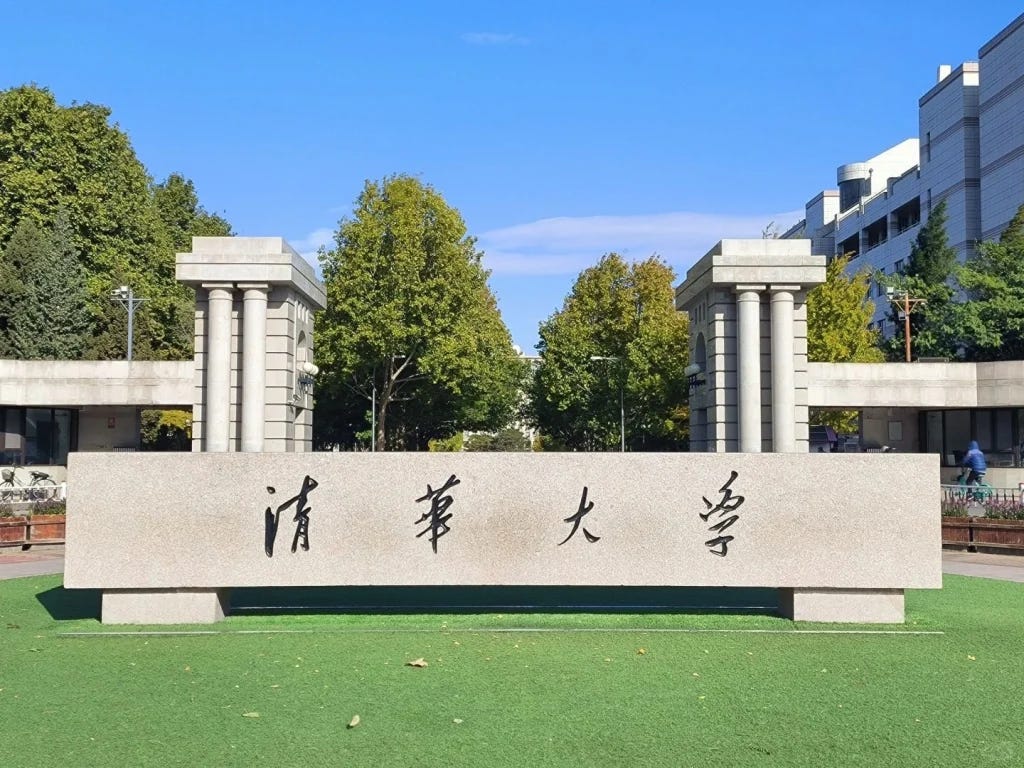
Why Is There No Centennial Reflection at Tsinghua?
[On November 7, 2025, former Wuhan University president Liu Daoyu (刘道玉) passed away. Many have shared tributes in his memory. In China’s education world, Liu was a legendary figure. In 1977 he became Director of the Department of Higher Education, and played a major role in setting things right after the Cultural Revolution and in restoring the national college entrance examination (Gaokao). After the exam returned to normal, he went to Wuhan University as president, the youngest university head in China at the time. During his tenure he actively advanced educational reform and cultivated talent on a large scale, earning the nickname “the Cai Yuanpei of our time” (蔡元培). Many intellectuals, including Yi Zhongtian (易中天) and Deng Xiaomang (邓晓芒), benefited from his teaching and support. What kind of person was Liu, and how did he view Chinese education? Consider a letter he wrote in 2011 to Tsinghua University (清华大学). As Tsinghua prepared to celebrate its centennial, Liu asked a pointed question: Why is there no centennial reflection? Readers may feel that these words from 2011 are not out of date in 2025. The ancients said, “Revise the old to know the new.” There is no intent here to belittle today’s accomplishments in Chinese higher education; the hope is only that today’s universities might look back at earlier words from the heart—Self-Discipline and Social Commitment (自强不息,厚德载物). Liu Daoyu also wrote for Humanities China (《人文中国》) on education. This piece is offered in mourning for his passing.]
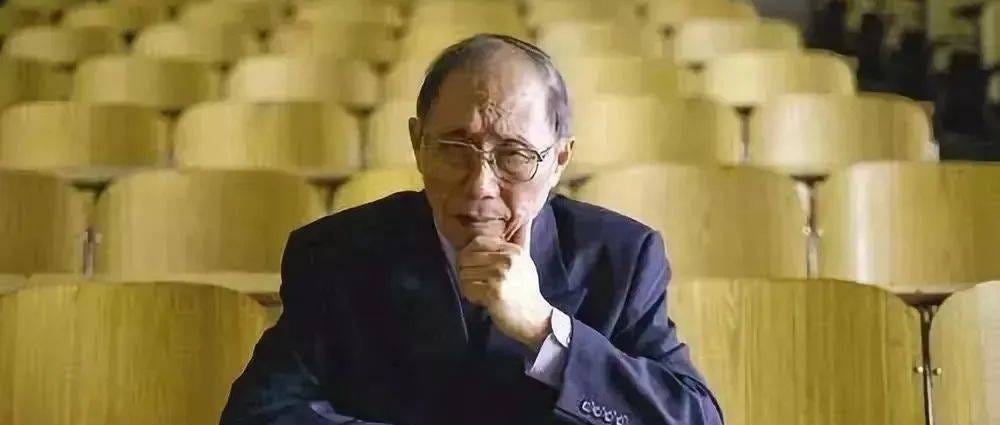
By Liu Daoyu (刘道玉)
Tsinghua University will soon welcome the joy of its hundredth anniversary. On this occasion, heartfelt congratulations are due to Tsinghua’s faculty, students, and staff: congratulations on the great achievements you have made in the past! Highest respect is also due to those who contributed to these accomplishments. May you, already at a great height, climb still higher!
By coincidence, the Massachusetts Institute of Technology (麻省理工学院) is also marking the 150th anniversary of its founding this year. Looking at how the two schools have arranged their celebrations, one cannot help reflecting. As MIT has announced: “From January 7 to June 5, a series of major celebratory events will be held. During the 150 days of the anniversary, MIT will not only honor past achievements and contributors, but will also conduct serious reflection on how to keep moving closer to the frontiers of research and to the world’s most pressing problems.” Now look at Tsinghua. Preparations for Tsinghua’s centennial began five years ago with the establishment of a preparatory committee, later changed to an organizing committee, under which eleven special working groups were set up. In addition, a development committee and an advisory committee were formed, and three years ago a 1,000-day countdown began. Preparations have certainly been thorough; publicity has certainly been extensive. Yet the overall celebrations still have not escaped the traditional ruts of formulaic thinking—massive publicity, inviting famous figures to lend prestige, and doing one’s utmost to proclaim merits and display successes.
Since last year, Tsinghua has launched activities such as “Centennial Ode,” “I Love Tsinghua,” “Centennial Tsinghua: Tireless in Striving,” and “Cross-Strait, One Heart,” and it has taken the publicity overseas. Last year a Tsinghua delegation visited Japan and held “University of Tokyo–Tsinghua Week” and “Waseda–Tsinghua Day.” In the United States the scale was larger: “Tsinghua Week” at the University of California, Berkeley; “Tsinghua Day” at the University of Chicago, MIT, and Columbia University; and a “Tsinghua University and Harvard University Student Forum” at Harvard University (哈佛大学).
When Wang Guowei (王国维) spoke about the spirit of scholarship, he said: “Those who accomplish great undertakings and great learning, ancient and modern, must pass through three stages: ‘Last night the west wind withered the green trees. Alone I climb the high tower, gazing to the ends of the earth’—this is the first stage. ‘My belt grows ever looser, yet I do not regret it, for I grow wan for her sake’—this is the second stage. ‘I searched for her thousands of times in the crowd. Suddenly turning, I found her there in the dim light’—this is the third stage.” This was the scholarly style of Wang Guowei and the scholars of his generation. Wang Guowei and the scholarly style he set forth are part of Tsinghua University’s spiritual wealth. Should they not be reflected upon and inherited?
Fifth, an elite university must keep its distance from a utilitarian orientation in running the school. The German philosopher Hannah Arendt (汉娜·阿伦特) once said: “When a university resolves to serve, on a regular basis, the interests of the state and social interest groups, it immediately betrays academic work and science itself. If a university fixes such a goal, it is tantamount to suicide.” On Tsinghua’s campus stands a stone stele engraved with the maxim “Action Prevails over Words” (“行胜于言”), regarded as the school ethos. The saying is certainly correct; it reflects the epistemology that practice comes first. From personal experience one can feel Tsinghua graduates’ pragmatic spirit; perhaps this is the main reason the school has produced seventy billionaires. Yet from the principles of creativity, every major scientific invention or creation begins with a new idea or an odd, seemingly outlandish notion. Put plainly, without strange ideas or the agitation of seeking difference, there can be no invention or creation. For this reason, to stress only “action over words” is not enough; it can lead to a poverty of “metaphysical” thinking among teachers and students, and thus stifle the imagination of the young. Precisely because of this, in the more than sixty years since Liberation, Tsinghua University has not produced influential, renowned thinkers. In the next thirty years (a generation), whether a cohort of intellectual and academic masters can emerge will be the key to whether Tsinghua can truly become a world-class university.
As an outsider, these observations and reflections are only superficial. The more important and valuable reflections must be made by those on the inside. Taking the opportunity of the centennial, it is hoped that Tsinghua will mobilize its community to conduct deep, wide-ranging, and serious reflection—summarizing useful experiences and lessons, standing on a higher starting point, daring to deny the self, and learning constantly to surpass the self.
To underscore once more the need for reflection, let me quote a passage from the inaugural address delivered three years ago by Harvard’s president, Drew Faust (德鲁·福斯特). She said: “A university must look backward as well as forward, and it must—indeed it should—do so in ways often at odds with the concerns or demands of the present moment. A university is about making a commitment to the eternal.” Here she sketches the spirit of a first-rate university, explains the importance of reflection, and points out that the way of looking must stand in opposition to contemporary utilitarian concerns.
If China truly wishes to build a few world-class universities, a very small number of institutions—including Tsinghua University—should locate themselves accurately and step out of the traditional mindset of serving immediate national economic construction. They should devote themselves to major questions fifty years from now, even a hundred years from now.
Finally, best wishes for the complete success of Tsinghua University’s centennial celebrations!
Respectfully submitted by an elderly educator,
Liu Daoyu (刘道玉)
March 19, 2011